
Places to visit in Mazury, Poland
Masuria (Mazury in Polish), a region famous for its lakes, is located in north-eastern Poland, in the Warmian-Masurian Voivodeship/Province, whose capital is the city of Olsztyn. The Province has two parts: Warmia and Mazury. Informally, everything (including Warmia and Olsztyn) that is in north-eastern Poland and has lakes is labeled Masuria.
Masuria is poetically called the Land of a Thousand Lakes (meanwhile, there are 2600 lakes!) and the Green Lungs of Poland (the cleanest region of the country).
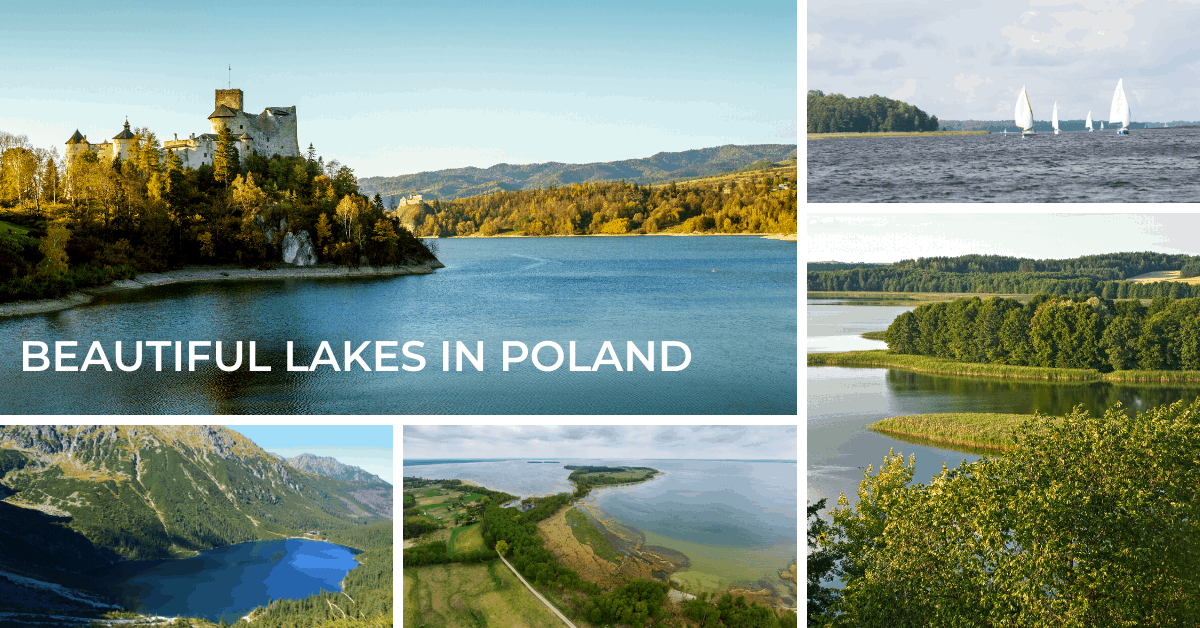
The biggest tourist attractions of the region are the lakes, including the largest lake in Poland, Lake Śniardwy (113.8 km²) and Lake Mamry (105 km²). Lakes in Mazury, connected with each other by canals, create ideal conditions for sailing.
It is a region beloved by families with children who spend their holidays by the lake, by people who like to enjoy their time in nature and by tourists who prefer active holidays – cycling, canoeing, hiking.
- Jump to how to get to Mazury (by plane, by car, by train)
- Jump to when is the best time to visit Mazury
- Jump to places to visit in Mazury and things to do in Mazury


How to get to Mazury
How to get to Mazury by plane
There is one airport in the Warmińsko-Mazurskie Voivodship (Polish name: Port Lotniczy Olsztyn-Mazury w Szymanach, location on Google map, website in English). The airport is located in the town of Szymany, 58 km from the province capital – the city of Olsztyn. Connections to this airport include: London, Dortmund, Kraków, and Wrocław.
If you are interested in the option of traveling by plane, you can also use the airport in the city of Gdańsk (Polish name: Port Lotniczy Gdańsk im. Lecha Wałęsy, location on Google map, website in English), the biggest airport in Poland in the city of Warsaw (Polish name: Lotnisko Chopina w Warszawie, location on Google map, website in English), the second Warsaw airport, located in the north of Warsaw towards Masuria (Polish name: Port Lotniczy Warszawa/Modlin, location on Google map, website in English). From there you can get to Masuria, e.g. by rented car or by train.
How to get to Mazury by car
Masuria is a very vast region. To give you a general idea, we list the approximate travel time by car to the capital of the Warmian-Masurian Voivodeship, the city of Olsztyn, from of the largest cities in Poland: Warsaw 2 hrs 40 mins, Wrocław 5 hrs 30 mins, Poznań 4 hrs 30 mins, Kraków 5 hrs 50 mins, Gdańsk 1 hrs 50 mins, Katowice 5 hrs 10 mins, Lublin 4 hrs 15 mins, Toruń 2 hr 40 mins, Łódź 3 hrs 30 mins.
How to get to Mazury by train
The timetable of trains in Poland and available connections can be found on this website: https://rozklad-pkp.pl/en.
When is the best time to visit Mazury
In order to fully and in various ways (sailing, kayaking, swimming, beaches, bicycles) enjoy the beautiful nature of Masuria, it is best to visit it in the summer months. Because it is the school holiday in Poland (the summer break in Polish schools lasts from the last week of June to September 1), this is the period when there are the most tourists. This applies especially to the most popular towns in Masuria – e.g. the towns of Mikołajki, Giżycko, Mrągowo.
If you want to avoid crowds, there are many peaceful oases in the countryside in this region.
Another way to avoid the holiday bustle is to go to Masuria in spring (April, May, and the beginning of June – a wonderful time in Poland, when nature comes to life) or in autumn (September and October in Poland usually still reward us with good weather).


Places to visit in Mazury and things to do in Mazury
The biggest lake in Poland and the town of Mikołajki – the touristic ‘capital’ of Mazury
- Just like the town of Zakopane during summer holidays is called the mountain capital of Poland, the town of Mikołajki is called the lake capital of Poland.
- Mikołajki is located on two lakes and very close to the largest lake in Poland – Lake Śniardwy. On Lake Śniardwy, you can admire eight islands and unique nature, including e.g. rare species of birds. A popular form of visiting Lake Śniardwy is taking a cruise from Mikołajki. The lake is considered one of the most densely stocked lakes in Poland, which is appreciated by fishermen.
- Mikołajki is one of the main sailing ports in Masuria, many sailing tourist trails lead here.
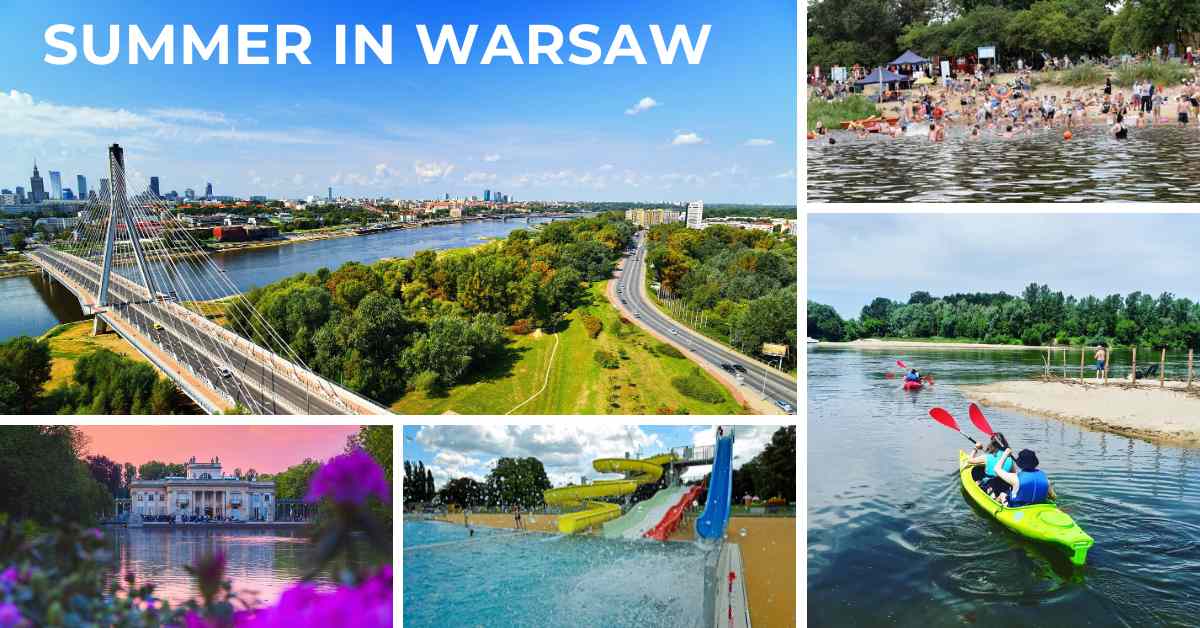
- There are many hotels, guesthouses, restaurants, bars, and cafes in Mikołajki. Lots of tourists are attracted by the vast hotel (Hotel Gołębiewski, website) with a large aquapark with indoor attractions as well as outdoor swimming pools and slides (Torpikana, website, our post presenting the biggest water parks in Poland, including the one in Mikołjaki).
- Location of Mikołajki on Google Maps.
- Website in Polish for tourists visiting Mikołajki.
The largest lake in Poland – Lake Śniardwy:


The town of Mikołajki:


The city of Olsztyn with 15 lakes – the capital of the Warmian-Masurian Voivodeship/Province
- The city of Olsztyn is located in the historical region of Warmia.
- It is a great place to start your adventure with the Polish land of lakes – it is easy to get there by car (for example 2 hrs 40 min-drive from Warsaw) or train (direct train from Warsaw: 2 hrs 15 mins), and the city has an interesting offer for families.
- What makes Olsztyn a unique place in Poland – there are 15 lakes within the city limits!
- This is a place for those who appreciate the comfort and infrastructure of the city – shops, cinemas, playgrounds, and city beaches (you can, for example, stay in a hotel within the city limits that has its own beach on the lake).
- In addition to beaches and lakes, other tourist attractions of Olsztyn include a gothic castle (website in Polish), a planetarium – Nicolas Copernicus lived and worked in Olsztyn (website in Polish), or the largest urban forest in Europe (Las Miejski, location on Google map).
- Location on Google map.
- Our tips for visiting the city of Olsztyn.


One of the most beautiful kayaking routes in Europe – the Krutynia River
- The canoeing trail on Krutynia is 100 km long and leads through unique forest areas, nature reserves: the Piska Forest (Puszcza Piska) and the Mazury Landscape Park.
- The kayaking trail on the Krutynia River is marked, the river’s current is slow, and the numerous meanders of the river and the interesting terrain are a great attraction for canoeists.
- You can rent boats (recommended for families with small children) or kayaks. You can choose from one-day, several-hour, or 8-10-day kayak trips.
- Several websites with offers of kayaking trips and renting kayaks or boats for the Krutynia River: boat trips and kayaking trips – website in English, 5 and 8-day kayaking trips, 1-hour boat tours, recommended for families, one-day kayaking, multi-day kayaking, kayak and boat renting, kayaking trips lasting several hours, weekend, 3-8 days, 1-day and 8-day kayaking trips – website in English.
- Location on Google map.


Something for those interested in the history of the Second World War – The Wolf’s Lair – the headquarters of Adolf Hitler
The Wolf’s Lair (in Polish “Wilczy Szaniec”, in German “Wolfsschanze”) is one of the most famous sites of World War II – Adolf Hitler’s main headquarters (in German “Führerhauptquartier”), a guarded “forest city.” Located in northeastern Poland, it is a popular destination among tourists visiting Masuria, the famous Polish lake region.
Construction began in 1940. The location was determined by strategic considerations: proximity to the Soviet Union border, well-developed fortifications in East Prussia, and dense forests that provided natural camouflage. Hitler arrived at Wolf’s Lair on June 24, 1941, two days after the beginning of Operation Barbarossa (the German invasion of the Soviet Union). He spent continuously over 800 days there (faced by the approaching Red Army, Hitler abandoned Wolf’s Lair on November 20, 1944).
Over 250 hectares of land, 200 structures were erected—from massive reinforced concrete shelters to barracks and guardhouses. The headquarters was a self-sufficient center, equipped with facilities such as an airport, a railway station, a sewage system, communications, a cinema, a hairdresser, and a teahouse. In 1944, approximately 2,000 people lived in the quarters.
It was here that an unsuccessful assassination attempt on Hitler took place on July 20, 1944. A few months later, with the Red Army approaching, the headquarters was abandoned, and many of the buildings were blown up.
Tips for visiting The Wolf’s Lair – the headquarters of Adolf Hitler (Poland’s Mazury region)
- Location: Wilczy Szaniec, Gierłoż 5, 11-400 Kętrzyn. Location on Google Maps.
- Tickets are available only on-site; no online purchases or advance bookings. Wolf’s Lair is one of the most popular attractions in Masuria. During the holiday season (July-August), it can be crowded. To avoid crowds, it is best to start visiting the museum immediately after the opening.
- Tours take place along marked paths and walking routes. The facility is accessible to people with disabilities.
- Please note that all the most important shelters and bunkers were blown up in 1945. While visiting the Wolf’s Lair, we only see ruins.
- The facility also has a café, toilets and showers, a room for parents and children, a souvenir shop, and an information point.
- On the premises of the Wolf’s Lair, there is a campsite and a hotel with a restaurant, located in the former residential quarters of the Third Reich Security Service.
- The easiest way to get there is by car. Paid parking is available for coaches, cars, motorcycles, and bicycles.
- The facility is open year-round, 7 days a week, including holidays.
- Paid audio guides are available for rent (approximately 2 hours). Available languages: Polish, English, German, Ukrainian, Lithuanian, Czech, and Polish sign language.
- If you have a budget, we recommend visiting the museum with a guide, especially if you are with children – the guide can adapt the pace and content of the museum tour to your family. On the museum’s website, you will find contact information for guides who work with the museum.
- It is possible to rent a ride in historic military vehicles around the Wolf’s Lair and the surrounding area. Details in Polish.
- Website in Polish.
- Our article with tips for visiting the Masuria region.
Visiting The Wolf’s Lair with children
- Wolf’s Lair is often visited by families with children during their visits to Masuria. It’s best to tailor your visit (and the scope of the historical information provided) to the child’s age and sensitivity.
- Marked tourist paths are accessible to parents with prams and people with limited mobility.
- There is no family ticket. Children aged 6 and under receive free admission. Reduced tickets are available to school students up to 18 years of age and university students up to 26 years of age.


Photo source: Ośrodek Edukacji Historyczno-Przyrodniczej “Wilczy Szaniec”, Nadleśnictwa Srokowo
Subscribe to our monthly newsletters in English to explore Poland and learn about Poland. Once a month you will receive a Newsletter: ‘Explore Poland with Kids‘. You will find there family-friendly destinations in Poland – beautiful places in Poland worth visiting with children – from city break destinations to hiking in the mountains (lots of practical tips!); things you can’t miss in Poland in a given month; dates to remember, holidays, observances in Poland in a given month so you can mark your calendars accordingly.
Click on the photos below to read other posts: