
Maria Oskroba of Pierogi and More cooking school in Warsaw shares her granny Helena’s best pierogi hacks and gives 10 reasons why (almost) everyone loves Polish dumplings
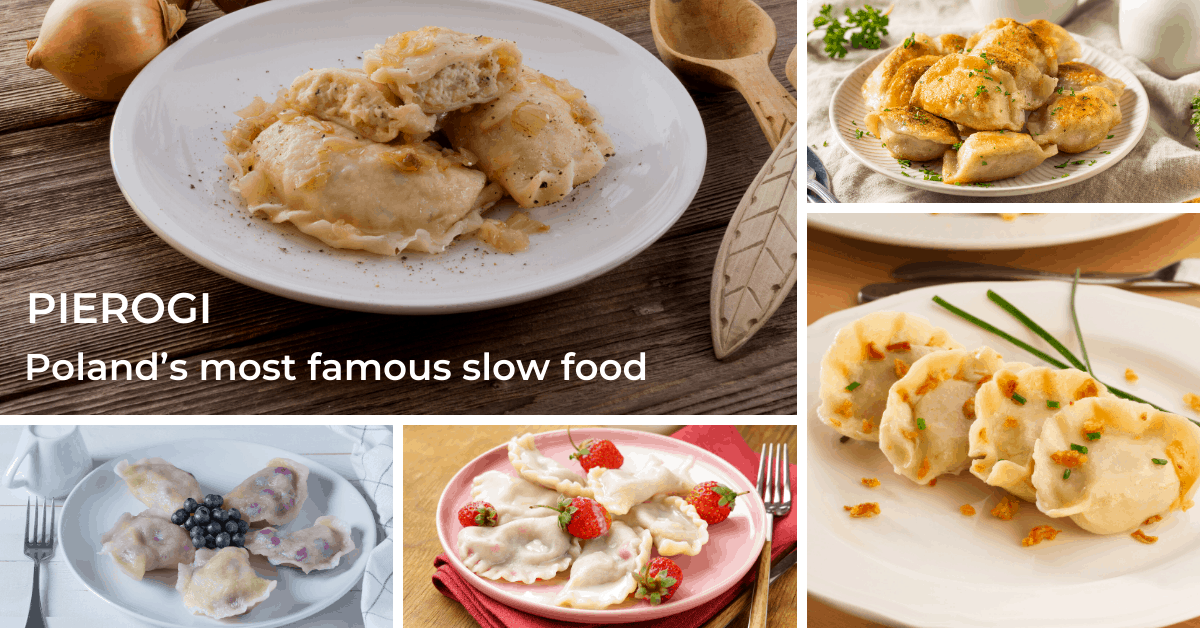
The word PIEROGI (pronounced: pyeh-RROH-ghee) derives from an old proto-Slavic word “pir” meaning a feast or merry gathering. No wonder pierogi is a highlight of a traditional Sunday family dinner in Poland.
Contrary to a common belief, dumplings were not invented by the Poles, nor should the credit go to the Italians. Chinese dim sum, the world’s first dumplings, appeared about 2500 years ago. Soon, this simple recipe made its way to tables in every corner of the world. Tortellini, ravioli, chinkali, gyoza, verenki, or empanadas are all distant relatives of Polish pierogi.
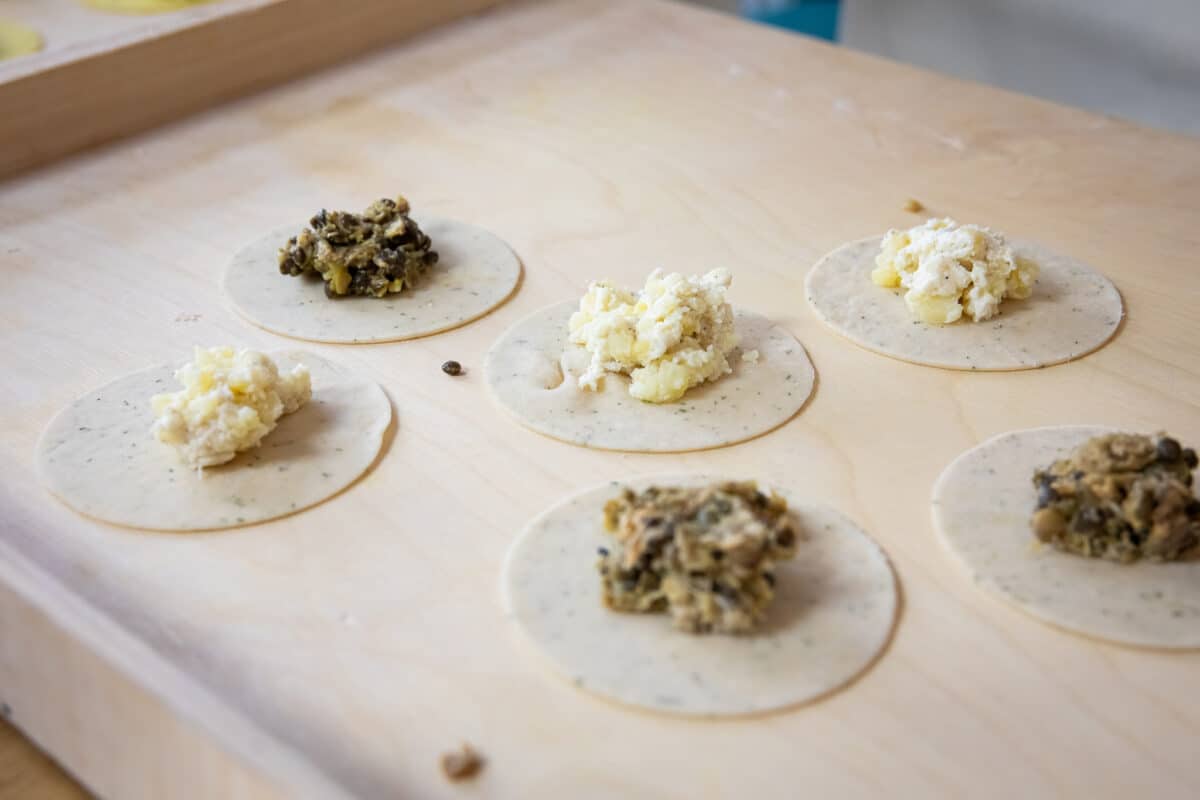
Pierogi arrived in Poland around the 13th century through Ruthenia («Ruś» in Polish), a region around Kyiv that was part of Poland for several centuries. «Ruskie pierogi», a popular vegetarian variant made of mashed potatoes and cottage cheese, does not translate into “Russian pierogi”; it means «Ruthenian«. A vast majority of Poles and foreigners share this linguistic misconception. Funnily enough, Ukrainians call them “Polish pierogi”.
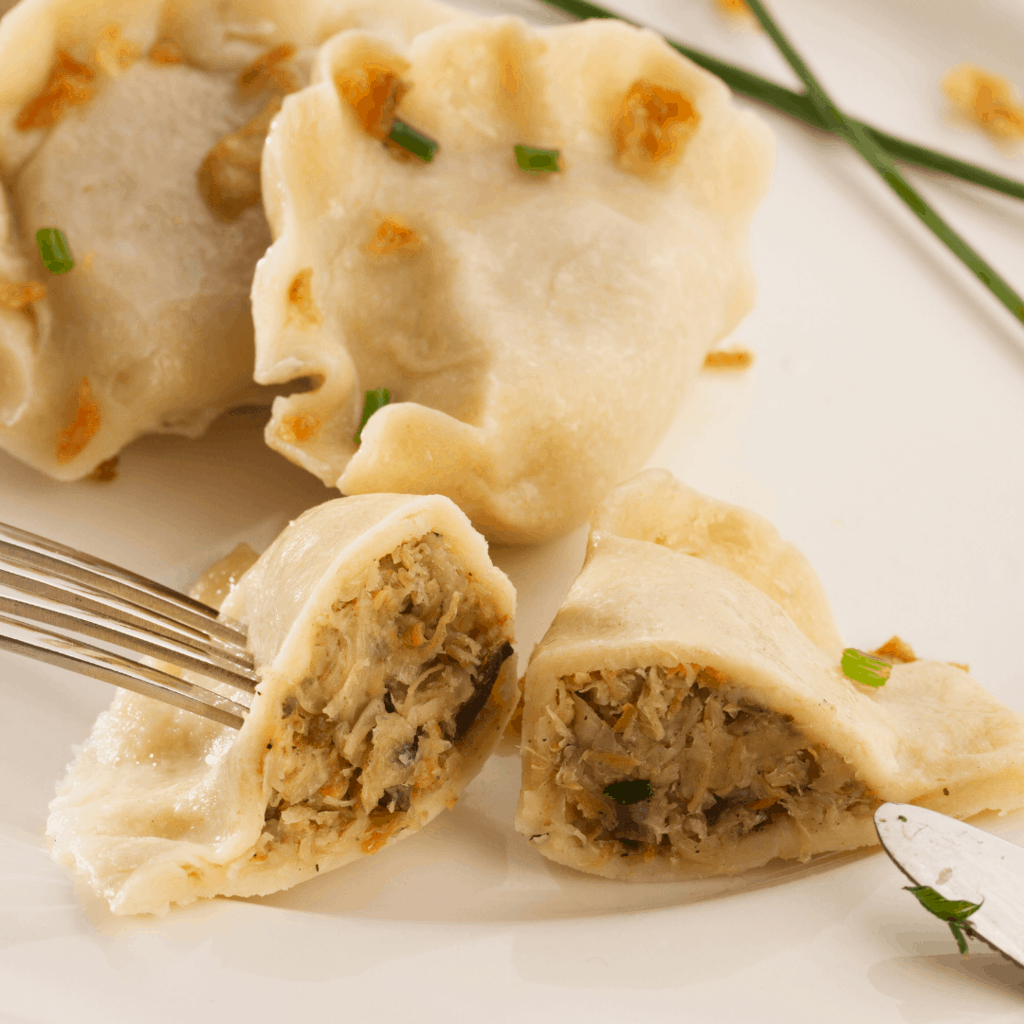
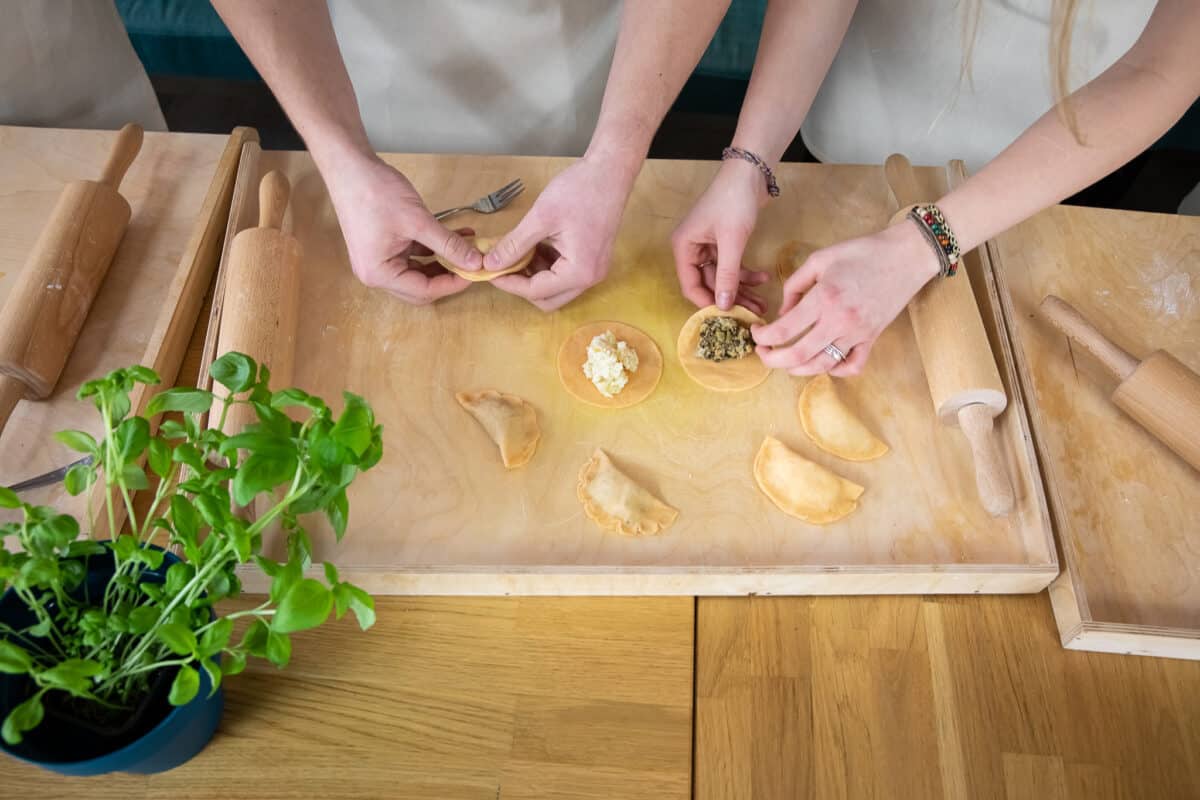
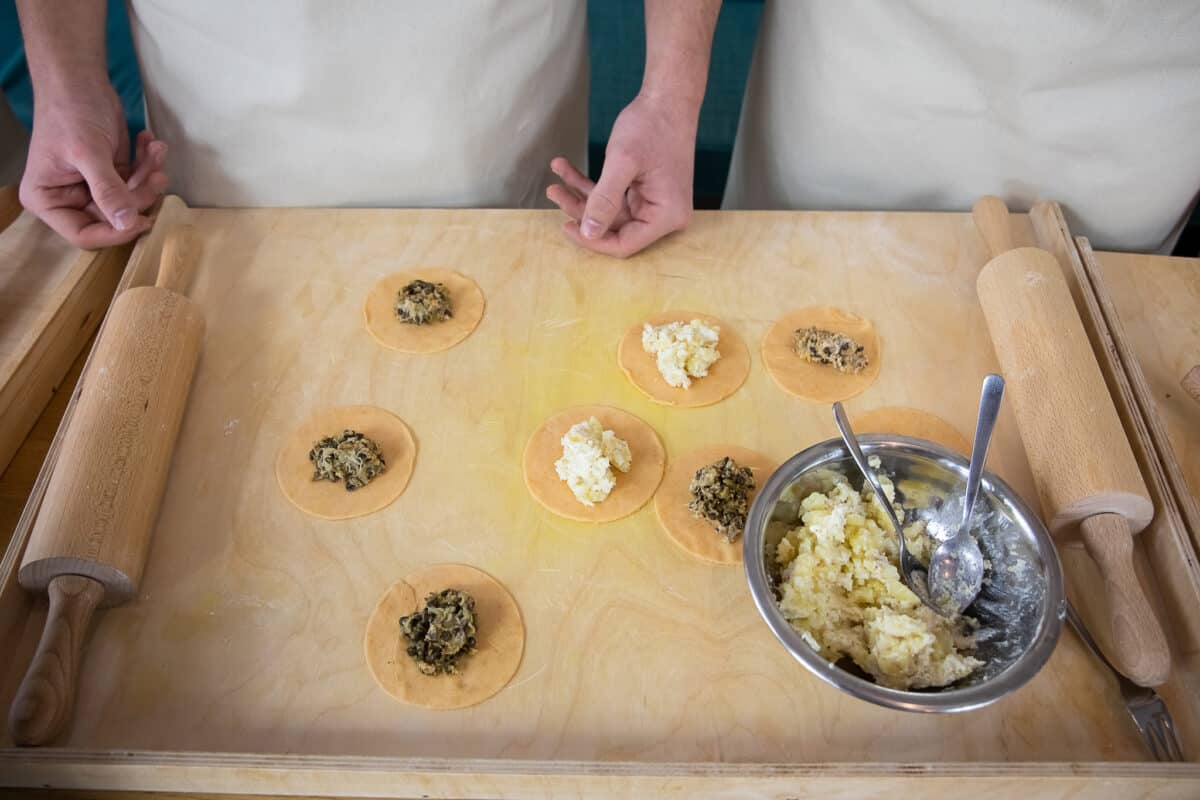
Dumplings filled with meat, ruskie pierogi, dried mushrooms, and tons of other filling options:
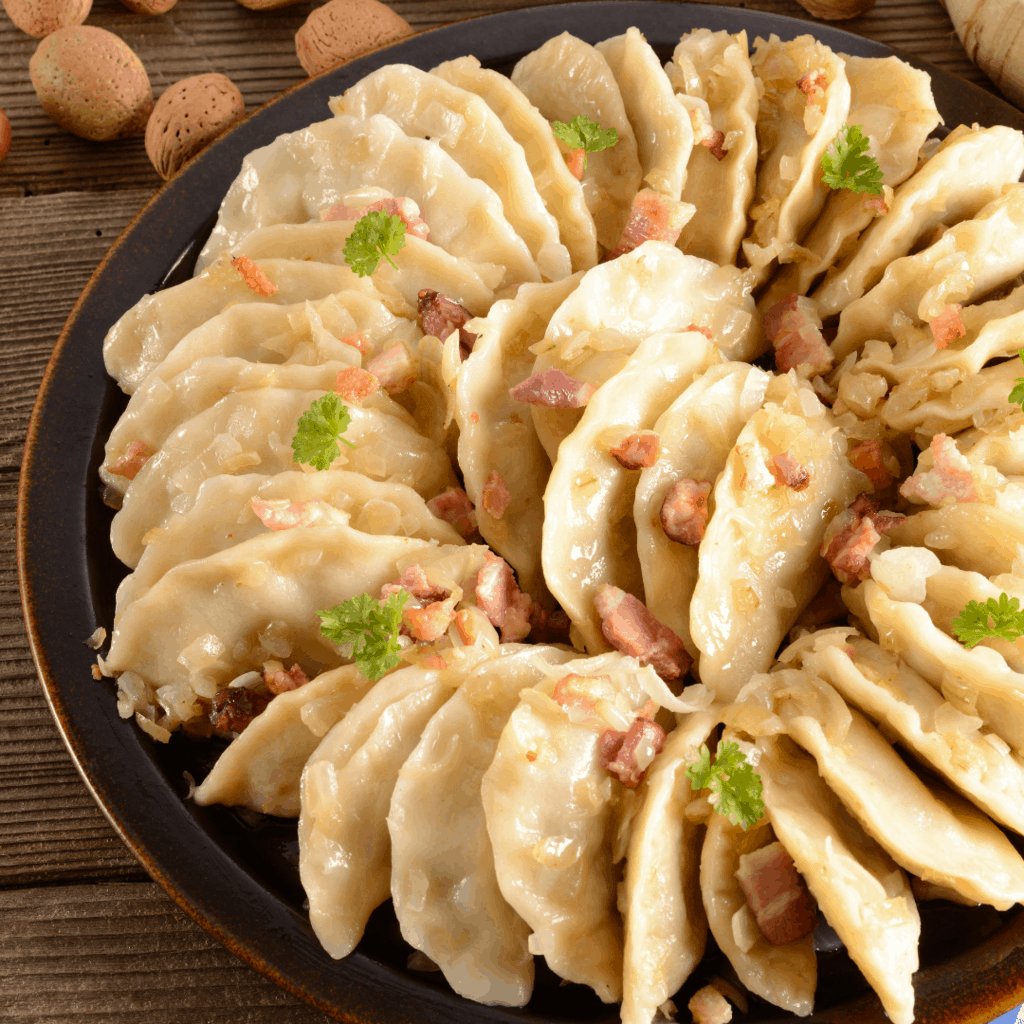

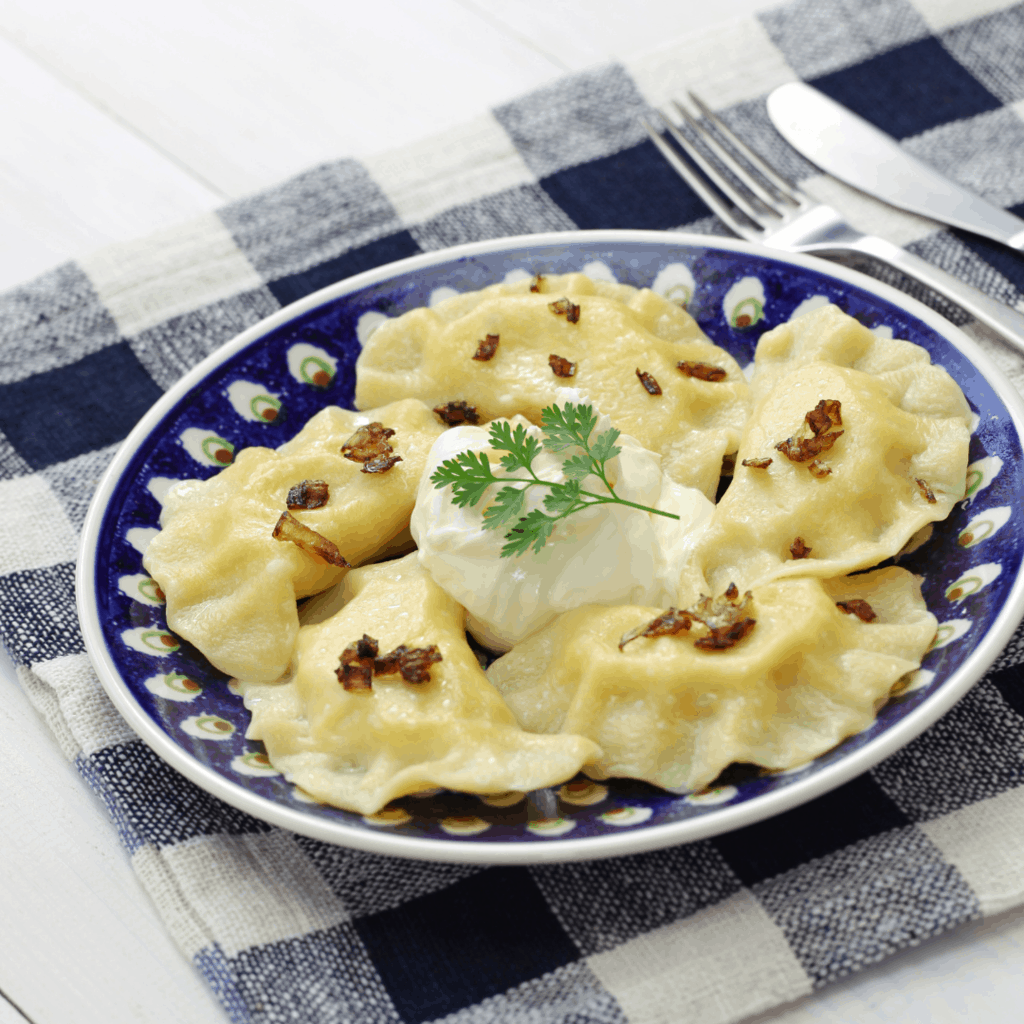
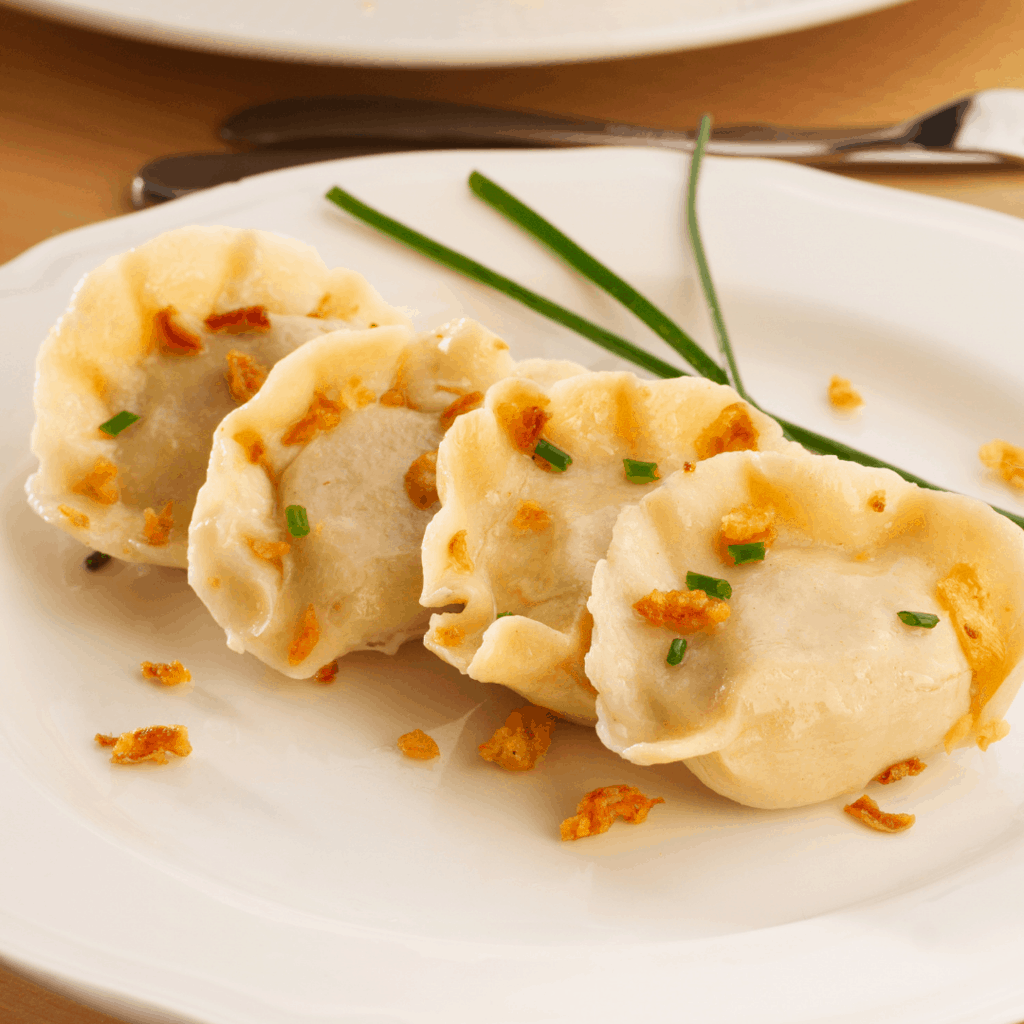
Why does (almost) everyone love pierogi?
- It is the most famous comfort food in Poland – traditional, with high sentimental value, and easy to like. The word «comfort» does not refer to the cooking process itself! Making pierogi is rather time-consuming and requires some patience. But the effect is definitely worth the effort.
- Dumplings are relatively cheap, at least their veggie version. Without a doubt, dumplings are immensely popular thanks to their low cost.
- Pierogi come in hundreds of varieties, and the list of possible fillings is absolutely endless. Just open your fridge, and you will surely find something that qualifies for pierogi stuffing, because…
- This is the ultimate leftover dish (like pizza, pasta, ravioli, samosa, quiche lorraine, and other poor people’s food).
- Two in one. You can prepare dinner for meat lovers and vegetarians in one go!
- In Poland, it can be served as a starter, side dish, main course, snack, in soup, or even as a dessert!
- It can be cooked, then fried, deep-fried, baked, or even grilled to achieve a crispy crust.
- Dumplings are not boring – they can be colorful! The dough can easily be tinted with natural or artificial food colorings (have you ever tried adding beetroot juice to the dough?).
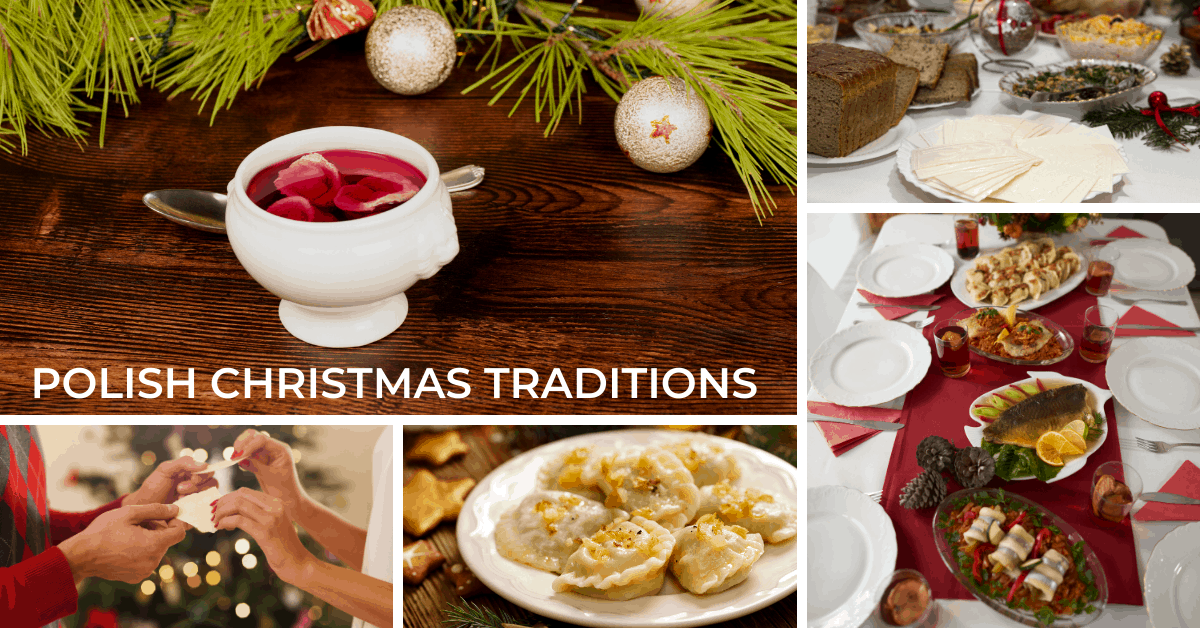
- It is the number one Christmas Eve dinner dish in Poland. Expect sauerkraut and dried wild mushrooms or poppy seed filling. The little «uszka» in the traditional beetroot soup are nothing but… little ear-shaped dumplings.
- Centuries after the invention of this simple food concept, extravagant fillings and fancy toppings turn pierogi into a gourmet delicacy. Slow food rediscovered!
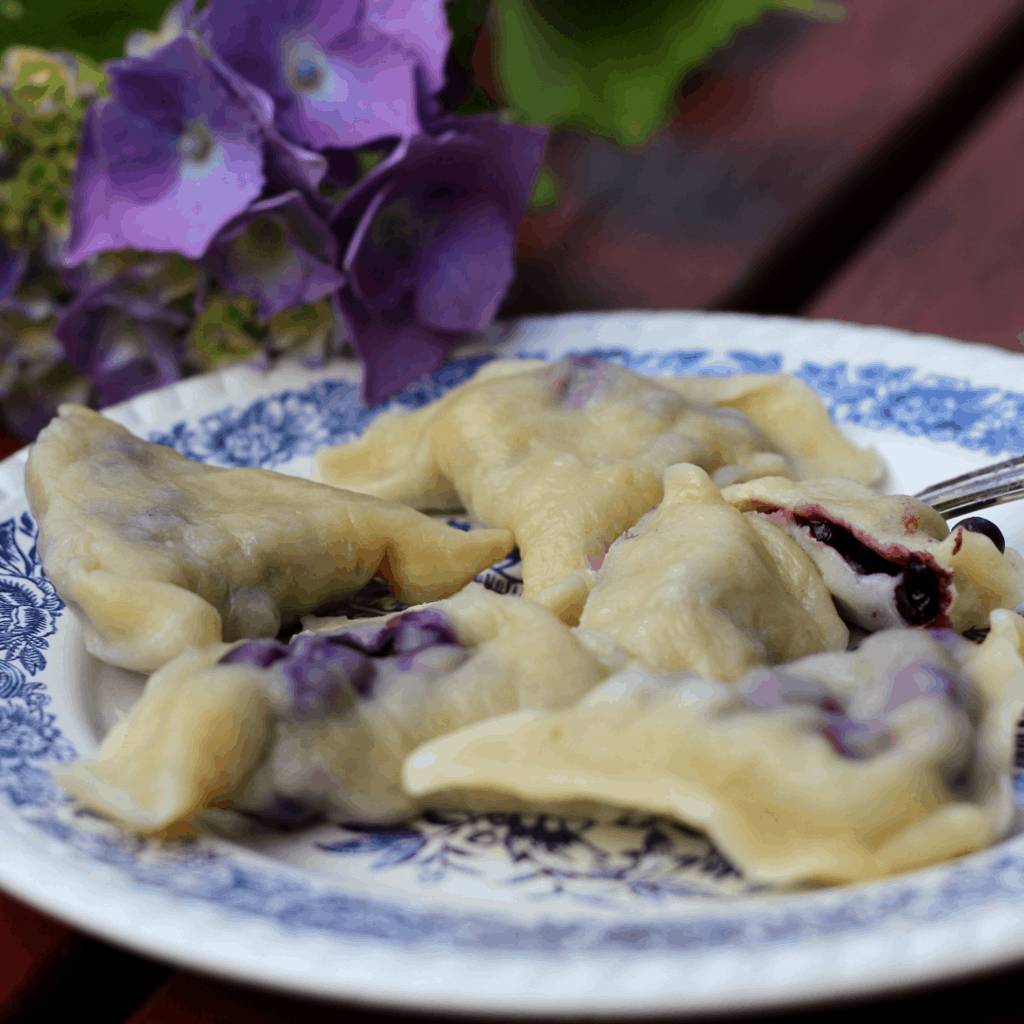
Sweet dumplings with fruit filling:
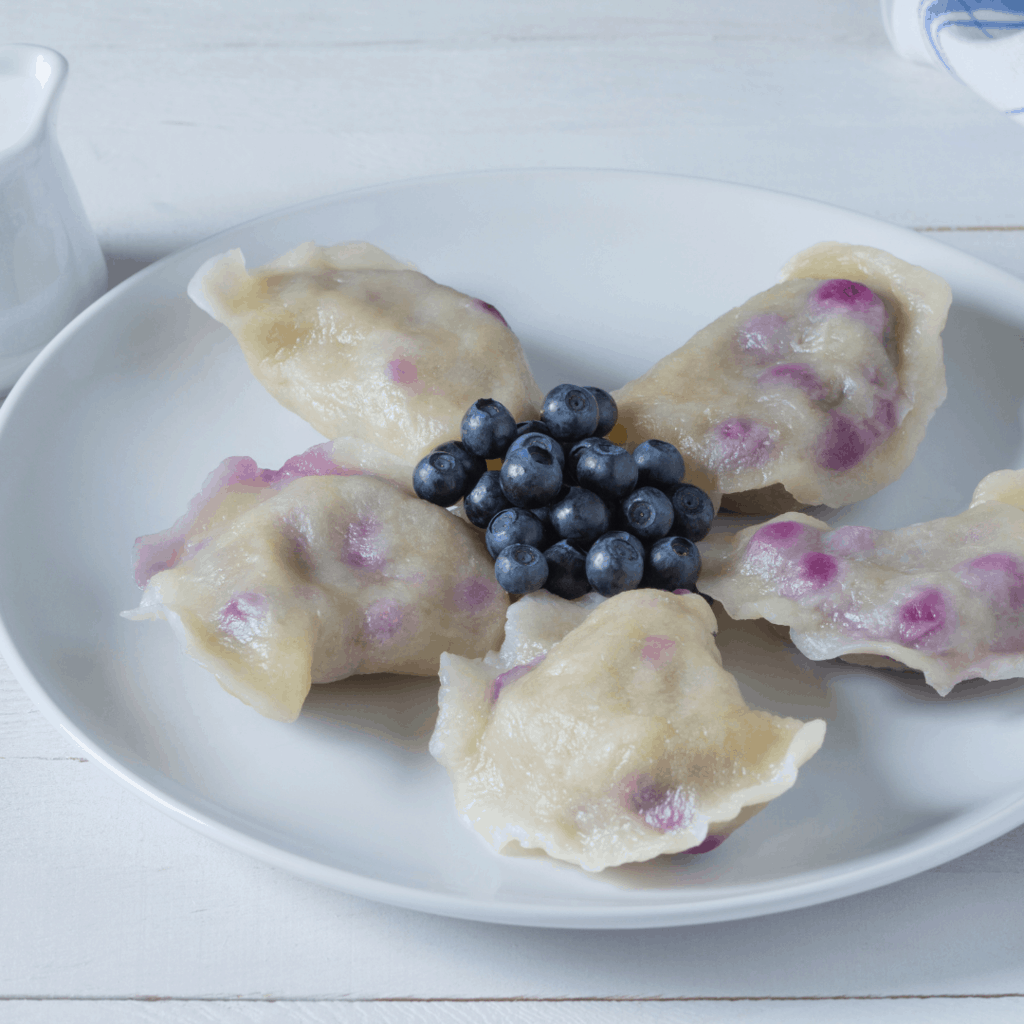
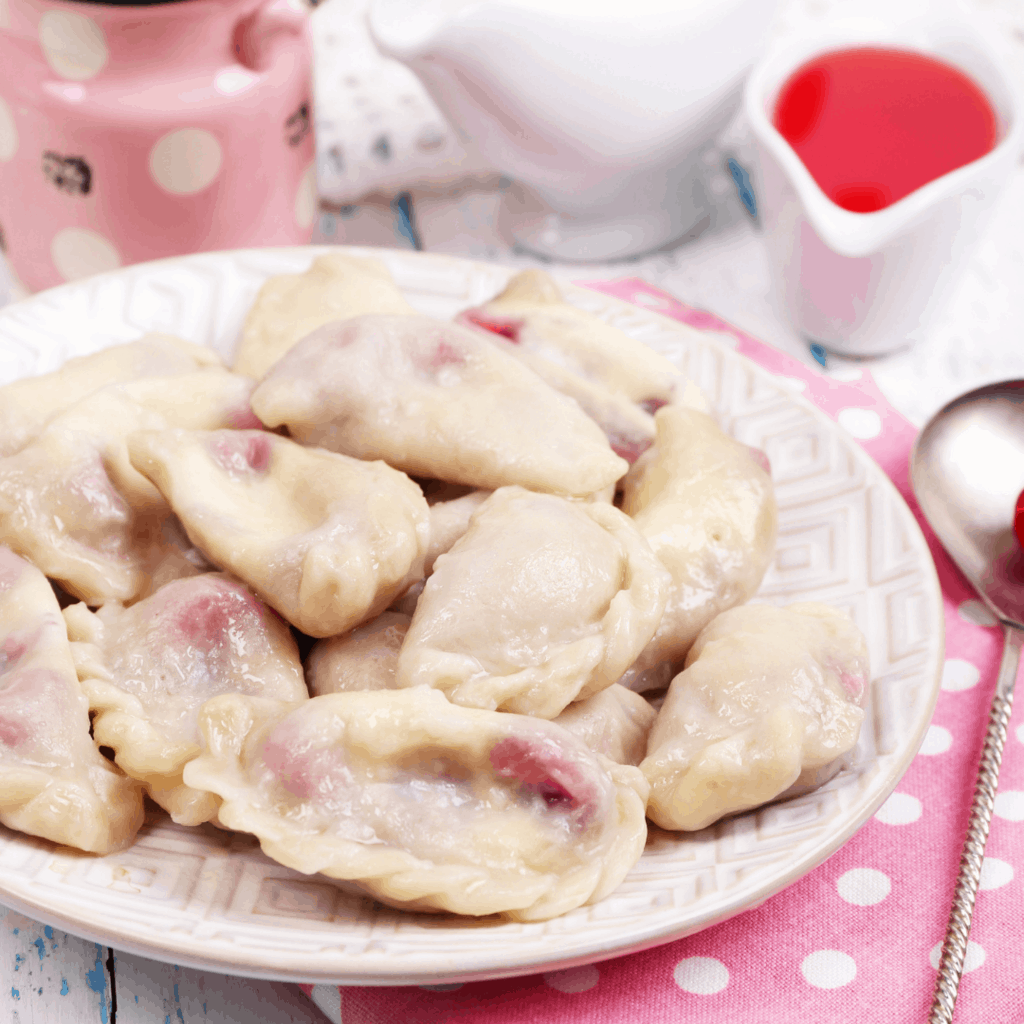

My granny, Helena, was a pierogi master! Here are some of her best pierogi hacks:
- The filling ingredients must be completely cold, otherwise, the dough falls apart.
- The time factor is essential – once you start, you have to hurry up. The dough dries out too much to use.
- Use some water to wet pierogi rims. If the dough is too dry, the edges don’t stick.
- Water for cooking should only be slightly simmering (not rolling boil).
- Cool your pierogi completely on an oiled platter, then sprinkle with oil before piling them into a food container for later.
- It makes absolutely no sense to make one portion of pierogi! But there is good news: they freeze very well.
- You may experiment with whole-grain flour. The dough can also be made gluten-free, although no fancy designs/shapes are possible with gluten-free flour.


About the Author
 Maria Oskroba is an experienced cook and traditional Polish food aficionado. She quit her corporate career to host people at a small restaurant and later at a cookery class.
If you want to learn to make Polish pierogi, you can book a class at Pierogi & More Cooking Class. The best culinary workshop in Warsaw, according to TripAdvisor, offers online and offline 2-hour courses for families, friends, schools, and employees. If you have questions or are looking to book a workshop, please check the details at www.pierogiandmore.pl or contact them at pierogiandmore@gmail.com.
Subscribe to our monthly newsletters in English to learn about Poland! Once a month, you will receive a Newsletter: ‘Explore Poland with Kids‘. You will find there family-friendly destinations in Poland – beautiful places in Poland worth visiting with children – from city break destinations to hiking in the mountains (lots of practical tips!); things you can’t miss in Poland in a given month; dates to remember, holidays, observances in Poland in a given month so you can mark your calendars accordingly: