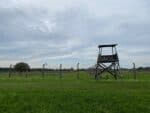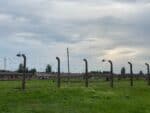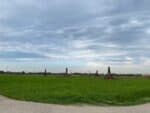

Guide to visiting Auschwitz with lots of practical tips
- How to get to Auschwitz by car, train, or plane
- How to get from Kraków to Auschwitz
- What is Auschwitz, Birkenau, Oświęcim, and Brzezinka?
- How can you visit the Auschwitz Memorial, and in what languages are guided tours available?
- The Auschwitz Memorial tour step by step
- Can I visit the Auschwitz Memorial without booking an admission ticket in advance?
- Visiting Auschwitz with children
How to get to Auschwitz by car, train, or plane
Auschwitz Memorial is located in the town of Oświęcim, in southern Poland.
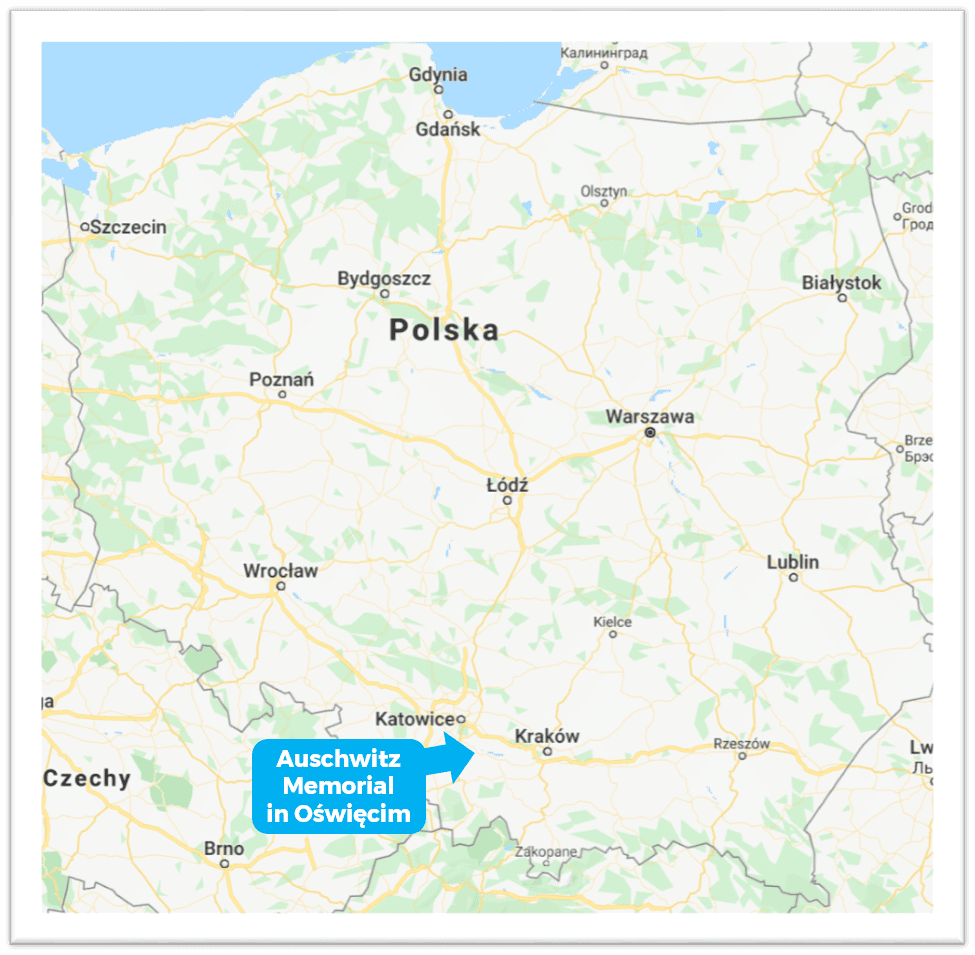
The entrance for visitors and the parking lot’s address: Więźniów Oświęcimia 55 Street, 32-600 Oświęcim (entrance for visitors’ location on Google Maps). Remember this pin, as the Memorial grounds are extensive and the visitors’ entrance used to be in a different location.
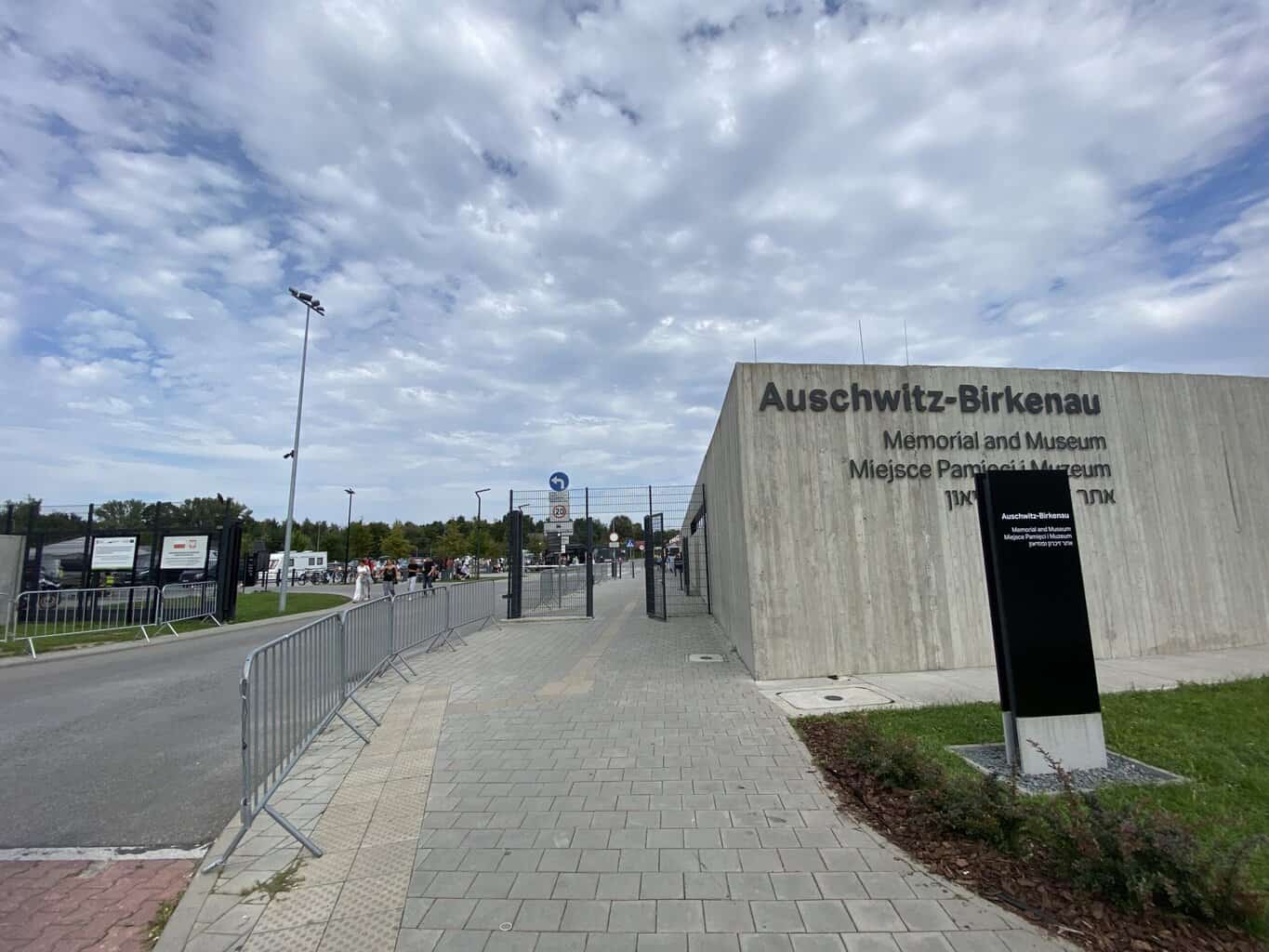
How to get to Auschwitz by car
A paid parking lot is on the Museum premises, right next to the entrance (entrance for visitors’ location on Google Maps). A free multi-story Park & Ride parking lot is next to the Oświęcim train station (location on Google Maps). Walking from there to the Museum takes about 20 minutes.
Approximate (depending on traffic) travel time by car from: Warsaw 3 hrs 40 mins, Wrocław 2 hrs 40 mins, Poznań 4 hrs 30 mins, Kraków 1 hr 20 mins, Gdańsk 5 hrs 50 mins, Katowice 45 mins, Łódź 2 hrs 50 mins, Toruń 4 hr.
How to get to Auschwitz by train
There is one railway station in the town of Oświęcim, and it is called Oświęcim (the railway station in Oświęcim on Google Maps). Here is the train timetable where you can check the connections and buy tickets online.
The most popular DIRECT connections include Warsaw (the shortest travel time: 3 hr 55 mins), Katowice (47 mins), Kraków (44 mins), Poznań (5 hrs 59 mins).
From the train station in Oświęcim, it’s 1.6 km / 1 mile (about a 20-minute walk) to the Auschwitz Museum’s visitor entrance (entrance for visitors’ location on Google Maps). The route is not complicated and is well-marked. Alternatively, you can take a taxi, usually available at the station and the Memorial entrance.
From April to October, a special bus line, “M,” runs between the train station and the main entrance to the Museum. The journey takes five minutes, and the bus runs every 30 minutes from 9 am to 4 pm. Tickets are available at the ticket machine.
How to get to Auschwitz by plane
There are two international airports near Oświęcim: Kraków and Katowice.
Kraków’s international airport, Polish name: Port Lotniczy Kraków-Balice: location on Google Maps, website in English. It’s located 50 km from Oświęcim.
Katowice’s international airport, Polish name: Port Lotniczy Katowice-Pyrzowice: location on Google Maps, website in English. It’s located 60 km from Oświęcim.
How to get to Auschwitz from Kraków
The most popular way to get to the Auschwitz Memorial is from Kraków, the second-largest city in Poland, the former capital of Poland, the seat of Polish kings, and a popular tourist attraction (our tips on visiting Kraków).
How to get to Auschwitz from Kraków by train
The central railway station in Kraków is called in Polish ‘Kraków Główny’ – the railway station in Kraków on Google Maps. There is only one railway station in the town of Oświęcim, and it is called Oświęcim (the railway station in Oświęcim on Google Maps).
Here is the train timetable where you can check the connections and buy tickets online. There are many direct connections between Kraków and Oświęcim. Train travel times vary from 44 minutes to 1 hour 34 minutes, depending on the type of train (express or local).
From the train station in Oświęcim, it’s 1.6 km / 1 mile (about a 20-minute walk) to the Auschwitz Museum’s visitor entrance (entrance for visitors’ location on Google Maps). The route is not complicated and is well-marked. Alternatively, you can take a taxi usually available at the station and the Memorial entrance.
From April to October, a special bus line, “M,” runs between the train station and the main entrance to the Museum. The journey takes five minutes, and the bus runs every 30 minutes from 9 am to 4 pm. Tickets are available at the ticket machine.
How to get to Auschwitz from Kraków by bus
This is the cheapest way to get to Auschwitz.
The main advantage of traveling from Krakow to the Auschwitz Memorial by bus is that you arrive right at the Museum building (unlike by train, where you have to walk another 20 minutes from the station to the Museum).
You can take a bus directly to the Auschwitz Museum building from central Kraków. The company operating these buses is called Lajkonik. Tickets can be purchased online or directly from the driver (card payment accepted).
The Lajkonik bus stops on the Museum grounds, next to the entrance. There’s a bus stop serving two lines: buses that take tourists to Birkenau as part of their tour, and a further stop: the Lajkonik buses to Kraków.
The bus stop at the Auschwitz Memorial is called in Polish ‘Oświęcim, Muzeum Auschwitz‘. The bus stop in the center of Kraków is located at the central bus station, called in Polish ‘Kraków, Dworzec MDA, ul. Bosacka 18‘.
What is Auschwitz, Birkenau, Oświęcim, and Brzezinka?
Oświęcim is a town in southern Poland. After the Third Reich attacked Poland, Oświęcim was incorporated into Germany (in October 1939). At that time, the Polish name of the town, Oświęcim, was changed to the German one – Auschwitz. In June 1940, the Third Reich established a concentration camp on the outskirts of Oświęcim, which they named Auschwitz. Two and a half kilometers from Auschwitz is the village of Brzezinka (the occupiers gave it the German name Birkenau), where in 1942 the second part of the camp was established, called Auschwitz II-Birkenau.
The Auschwitz Memorial guided tour covers two parts of the camp, starting at Auschwitz and ending at Birkenau, where visitors are transported by a shuttle bus provided by the Museum.
How can you visit the Auschwitz Memorial? In what languages are guided tours of the Auschwitz Memorial available?
Due to the growing number of visitors, the rules for entering the Auschwitz Memorial site changed in 2025. This is a good change if you plan your visit in advance – you can book a convenient date online and be sure that you will start visiting the Museum at the chosen time.
Auschwitz Museum offers the following options:
- Recommended by the Museum – a paid, 3,5 hour tour with a museum guide (referred to as an educator on the museum website). Prior online time slot reservation is required (at visit.auschwitz.org, select “Visit for Individuals”). This is a guided group tour for a given hour. You can choose the language of the tour, with the largest selection available for tours in July and August: Polish, English, Czech, Slovak, Russian, French, German, Spanish, and Italian. During the year’s remaining months, tours are available in the following languages: Polish, English, Russian, French, German, Spanish, and Italian. Reduced tickets are available to students up to 26 years of age, people over 75, and disabled people upon document presentation.
- You can also book a tour with a museum guide/educator just for yourself. This can be a good option for families, as the guide can adapt to your needs. Prior online time slot reservation is required (at visit.auschwitz.org, select “Visit for groups”, you must create an account; after submitting your inquiry, you will receive a response by email). This option offers a broader choice of tour languages: Polish, English, Czech, Slovak, Russian, French, German, Spanish, Italian, Croatian, Hebrew, Japanese, Korean, Dutch, Norwegian, Portuguese, Serbian, Swedish, Ukrainian, and Hungarian.
- Free entrance, without a guide (afternoons only). Prior online time slot reservation is required (at visit.auschwitz.org, select “Visit for Individuals”). The free entry pass can only be obtained online; it cannot be obtained on site at the Museum ticket office. Online free entry pass reservations are possible from 90 to 7 days before the planned visit date. Please note that during high season (April to September), you can only reserve free entry passes for slots after 5 pm. Free entry pass bookings are only possible for afternoon slots: January, November: from 2 pm, February: from 3 pm, March, October: from 4 pm, April-September: from 5 pm, December: from 1 pm.
How does a tour of the Auschwitz Memorial with a museum guide/educator work step by step
- Purchase a guided tour online at the museum website for a specific date and time (visit.auschwitz.org).
- Arrive at the Auschwitz Memorial a little before your scheduled tour time. The entrance for visitors and the parking lot’s address: Więźniów Oświęcimia 55 Street, 32-600 Oświęcim (entrance for visitors’ location on Google Maps). You should arrive a little before your tour time, but don’t arrive too early, as you won’t be able to enter the Museum building anyway; you’ll have to wait outside by the parking lot. In front of the Museum, there is helpful Museum staff who can answer your questions in English. In front of the entrance to the Museum, there is a parking lot, free toilets, vending machines with drinks and snacks (card payments accepted), and paid luggage storage (card payments accepted).
- Signs will be posted at the entrance to the museum with your tour time. Then, you can enter the Museum building.
- When entering, in addition to the ticket, you will have to show some ID (the ticket contains the name and surname of the visitor); this also applies to children. Remember to bring ID for all visitors!
- You’ve been outside in front of the Museum building all this time, and now you’re finally going inside. The next step is a security check, similar to an airport one.
- Inside the Museum building, approach the information desk, where you will receive a sticker on your clothing with the time and language of your tour.
- At the tour start time, the guide takes you to the place where you will receive headphones and begin the tour.
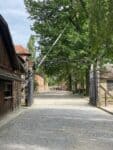
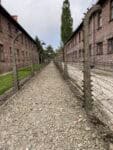
- The first part of the tour covers the Auschwitz concentration camp. You will walk around the camp, listen to a guide, see the “Arbeit macht frei” gate, and enter the barracks where the photos and displays are located.
- Next, your group will exit the Auschwitz camp grounds, in front of the Museum building, where you entered the Museum. There’s a bus stop there, where a shuttle bus provided by the Museum will take you to the second part of your tour – Birkenau (you do not need a bus ticket).
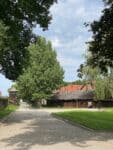
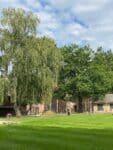
- The second part of the tour is a visit to the facilities in the Birkenau camp: prisoner barracks, the unloading ramp, the ruins of the gas chambers and crematoria.
- The tour ends here in Birkenau (after about 3.5 hours, with a lot of walking!) and you’ll return to the main museum building on the shuttle bus.
Can I visit the Auschwitz Memorial without booking an admission ticket in advance?
The Auschwitz Museum is visited by approximately two million people annually, so planning your visit well in advance is recommended. During the high season (April-September), buying a ticket for a guided tour overnight is very difficult, especially if you need several tickets for your family.
There is basically no such thing as a ticket office at the Auschwitz Memorial. Everything, including guided tour tickets and free entry passes, can be booked online. Availability can be easily checked on their online reservation website: visit.auschwitz.org.
There is a limited number of entry passes for paid tours available each day at the service points in front of the main entrance to the Museum. But, especially in the high season, they are sold out early in the morning, right after opening, so we do not recommend this option (even if you go early in the morning to buy a ticket, there may already be single tickets available for the afternoon tours, which means you have to wait in Oświęcim from the morning until late afternoon).
Booking a free entry pass is easier than a guided tour; however, these are only available for afternoons. For example, during high season (April to September), you can only reserve free entry passes for slots after 5 pm.
Visiting the Auschwitz Memorial with children
According to official Auschwitz Memorial regulations, there is no age restriction on entry for children. The Museum website states: “Children under 14 are not recommended to visit the Museum.”
Parents must answer both of these questions before deciding to take their child to the Auschwitz Memorial. Will my child be able to cope with a visit to the former extermination camp emotionally? Will my child be able to remain silent and respectful during the tour? From the reports of Museum guides and our visit, it is clear that parents bring children of different ages to visit the Auschwitz Memorial. What is worth remembering if parents decide to visit the Auschwitz Memorial with their child: Photos taken by the author during the tour in August 2025. First part of the tour, Auschwitz: Photos taken by the author during the tour in August 2025. Second part of the tour, Birkenau: Subscribe to our monthly newsletters in English to explore Poland and learn about it! Once a month, you will receive a Newsletter: ‘Explore Poland with Kids‘. You will find there family-friendly destinations in Poland – beautiful places in Poland worth visiting with children – from city break destinations to hiking in the mountains (lots of practical tips!); things you can’t miss in Poland in a given month; dates to remember, holidays, observances in Poland in a given month so you can mark your calendars accordingly.